Contents #
Intro #
We’ve all seen the sad product that no one loves:
And we’ve also felt the pure joy that is a product built, tuned, labored after, obsessed over, and maintained at near perfection by true craftspeople:
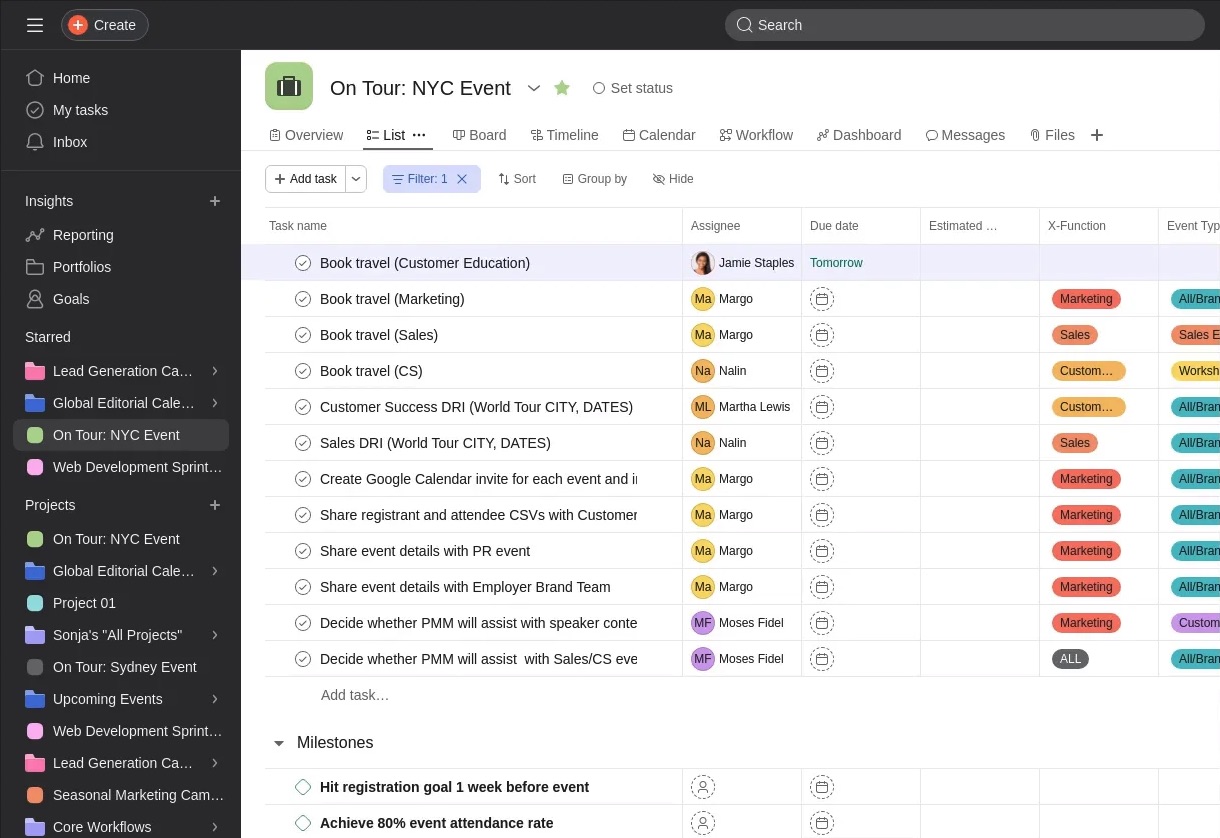
A product that is fast, works on all hardware/browsers/situations, and never seems to have a bug.
I'm here to claim that good dogfooding is what makes the latter possible. And even if you already know what dogfooding is, keep reading — the AI age changes the stakes in ways most teams haven’t internalized yet.
Necessary but not sufficient #
The best products are made by the best product and engineering teams, where excellence, meticulousness, and attention to detail permeate the whole org from bottom to top. Dogfooding usually plays a huge role in that ongoing quality — it’s really hard to imagine that level of scrutiny channeled without a real dogfooding process in place.
A good dogfooding culture gives you the scaffolding to create and maintain excellence. But you still need to do the hard product work — like actually talking to customers — and you have to be honest with yourself about the limits of dogfooding.
The good news:
- Dogfooding can be adopted by any team, regardless of experience level
- And it can bring a huge product-quality boost almost immediately
Figma: only design in Figma #
For roughly 18 months before its 2015 closed beta, Figma’s team had one ironclad rule: every new design happens in Figma. Dylan Field:1
"We made it a rule for ourselves to only make new designs in Figma. … While initially painful, dogfooding early in our product’s lifecycle helped us prioritize the right things and create processes to keep the quality of the product high."
Initially painful. That’s exactly the right phrase. Real dogfooding is, at first, slower than the alternative — and that’s the point.
So what actually is good dogfooding? #
Most people in product and engineering have heard of this concept, but it’s always worth re-checking the definition you’re carrying around.
At the simplest level, "eating your own dog food" means nearly everyone in your company using your own product(s) often, and in a way that’s consistent with how your customers do. Done well, this:
- Catches more bugs
- Surfaces performance issues
- Builds product intuition across the org
- Helps you figure out what to build — and just as importantly, what not to build
And keeping it that simple is important; there are plenty of ways to over-engineer it, and we’ll get to pitfalls in a minute.
The origin: Microsoft 1988 and Apple 1980 #
"Dogfooding" was popularized inside Microsoft in 1988, when manager Paul Maritz emailed test manager Brian Valentine with the subject line "Eating our own Dogfood," challenging him to drive internal adoption of Microsoft LAN Manager.2 The phrase came from Jim Harris, Microsoft’s first head of OEM sales, who used to ask after presentations, "Yes, but will the dogs eat the dog food?" — likely echoing 1970s Alpo commercials in which Lorne Greene said he fed Alpo to his own dogs. Microsoft’s networking server was literally named \\dogfood.
Eight years earlier, Apple president Mike Scott had issued a memo on Feb. 1, 1980 making the same move in physical-product form:3
"Effective Immediately!! No more typewriters are to be purchased, leased etc., etc. … We believe the typewriter is obsolete. Let’s prove it inside before we try and convince our customers."
That single line is still the cleanest articulation of the philosophy.
Why now? AI just raised the stakes #
At Chorus, as more and more software was created by non-humans in 2024+, it became clear that we had to heavily invest in verification — loads of tests, from unit to e2e — and dogfooding fit there nicely.
By late 2025, some estimates put even large, well-established companies’ rates of code generation at 3x+ pre-LLM levels. That’s a staggering figure no matter how you look at it, and it makes a strong case for some form of increased verification. Code, tests, and even AI-generated code summaries are still difficult and time-consuming to read.
The verification problem compounds even harder when the LLM is exposed directly to users:
- Outputs are stochastic — you can’t fully specify or expect to test all cases
- Quality drifts silently as models and prompts change
- "Chat bots" and similarly streamed experiences are often a new form factor for makers and users
Anthropic: antfooding #
Anthropic calls their version "antfooding." Roughly 70–80% of technical Anthropic employees use Claude Code every day4. The product team gets a feedback message about every five minutes. The internal alpha hit 20% engineering adoption on day one, 50% by day five. Mike Krieger, CPO:4
"Claude is now writing Claude."
That’s not a slogan; it’s a release strategy. And it’s the natural endpoint of taking dogfooding seriously when the product itself is non-deterministic.
How not to dogfood #
A few traps worth naming up front:
Dogfooding is easiest for business products — Asana, Slack, Outlook, Linear — that staff can use directly as part of their day-to-day. Anything else takes more care and creativity, which unfortunately is most products. But also: not dogfooding a business product like that is a glaring red flag, and a fatal one if customers ever find out.
Forced testing sessions outside of your product/eng team can backfire:
- It feels like work, like a chore
- It drains willpower
- It creates a negative association with your own product, which can make team members quietly stop using it
- (Of course, video games and other "fun" products may not have this problem — lucky you.)
Putting too much emphasis, structure, or process on dogfooding is often inappropriate:
- Remember: dogfooding is necessary, not sufficient
- You usually are NOT your customer — and you are definitely NOT your only customer
- It’s best treated as a sanity check, not a substitute for hard/necessary product work
Notion: the lost years #
Notion almost died from over-dogfooding. Co-founder Ivan Zhao described an early phase he calls Notion’s "lost years," where the team was building "for ourselves, not for the world." Dogfooding without enough external customer contact almost killed the company. The fix wasn’t less dogfooding — it was pairing it with deep customer immersion.5
Going deep #
Beyond the "just use your product" mantra, a few things help you actually go deep. You’ll notice a lot of overlap with plain good product development and business building — that’s a feature, not a bug.
Tighten the feedback loops. Mary works for you and has found a bug. How does she report it? Does she get notified when it’s fixed, or going to be fixed? Does she get recognized for her contribution? And what about Barry, who doesn’t work for you but found the same bug — should he go through a separate process? Probably not.
Keep the process simple, organized, and as low-effort as possible. A Slack channel for bugs can be fine, but how do you reconcile customer support requests, GitHub issues, and other sources? AI can help flag duplicates, ask for missing info, and triage — but the goal is not a giant mess of half-routed signal.
Does everyone in the org use the product? Especially leadership. This will usually make or break the process. Diverse teams with diverse backgrounds testing the same product is invaluable.
Does your product even allow for near-constant usage? If your product books hotel reservations, dogfooding is still important — but it’s likely not constant enough to receive the full benefit. (More on tricky products below.)
Dogfood as pre-release feedback. Do you have a culture of experimentation, and acceptance of (measured) failure? This is often difficult to attain, especially in regulated environments, but it compounds beautifully when it works — as demonstrated by Anthropic.4 The ability to internally test a new concept with a sizeable internal quorum helps you catch duds and quickly identify hits (ahem Claude Code ahem).
Valve: the Cabal and silent playtesting #
Valve’s "Cabal" is the gold standard of going deep. For Half-Life, Valve ran 200+ two-hour playtests. A level designer and an engineer sat silently behind each tester, forbidden to speak. Ken Birdwell wrote:6
"Nothing is quite so humbling as being forced to watch in silence as some poor play-tester stumbles around your level for 20 minutes, unable to figure out the 'obvious' answer."
And on settling design disputes:
"It became obvious that any personal opinion you had given really didn’t mean anything, at least not until the next play-test session."
The lesson generalizes far beyond games: observed use beats opinion. Half-Life 2 scaled this further — three semi-independent "cabals," ~100 playtesters per chapter, playtests re-run after the art pass to confirm the gameplay still held. Naughty Dog runs the same loop, weekly, near launch.
Food for thought: dogfooding tricky products #
Some products resist dogfooding by their nature. A few angles worth thinking about:
- Admin and internal tools built on your same core stack — especially in the AI age, where building admin tools is nearly free
- Adjacent uses of your core product — does BioRender use their own charts to do product planning? Asana found all sorts of business uses for their ticketing product, from forms to feedback. Maybe your medical product allows for wellness/less-regulated use cases — sleep, workouts, journaling, nutrition
- Cross-platform apps (Flutter, React Native, etc.) — one codebase that runs on web, iOS, Android, Mac, Windows, and Linux means a lot more surface area to dogfood for the same engineering cost
Then there’s the elephant in the room: Howard Schultz, the former Starbucks CEO, was once asked how he got all his baristas to smile. He replied: "I hire people who smile." The point holds either way — it’s almost impossible to force someone to regularly use a product they don’t enjoy. Sometimes great dogfooding means rethinking who you hire, or having some difficult conversations.
Shopify: when the product IS the dogfood #
Shopify is the ultimate dogfood-as-origin story. Tobi Lütke built the e-commerce engine because he couldn’t find good software for his snowboard shop, Snowdevil. The shop became the proof, and the platform became a $100B+ company. The product was the dogfooding.7
Get started now! #
- Tell everyone why this matters — make the case before the mandate
- Leaders should be consistently and clearly using the product (one step short of mandates)
- And regular/standing meetings are a great place to show this off via screenshare (like always bringing up the product board during standup)
- See how you’re already doing (hopefully you have product analytics)
- Highlight all those non-obvious use cases
- Make it fun
- Build the cheap infra first: nightly builds, auto-installed on real devices, clearly versioned, with a frictionless bug-reporting path. The infra is what makes super dogfooding constant instead of theoretical.
- Pair it with real customer contact — sit with a customer often, whether you’re a founder, a forward-deployed engineer, or a PM. Dogfooding alone will bias you toward power users.
The cheapest competitive edge in software has always been: actually use the thing you ship. AI just made it the only edge that scales. Start small, mandate it, instrument it — and don’t confuse it for customer research.
Appendix #
1. AI dogfooding (deserves its own post) #
I'm collecting these here because the AI angle is rich enough for a separate post. Highlights for now:
- Anthropic — "antfooding." Cat Wu (head of product, Claude Code): "Internally over I think 70 or 80 percent of ants — technical Anthropic employees — use Claude Code every day. … We have a feedback channel. I think we get a post every five minutes." The internal Claude Code alpha hit 20% engineering adoption on day one, 50% by day five.4
- Anthropic kills features through dogfooding. Boris Cherny described un-shipping the LS tool because better permission enforcement existed for bash. Cat Wu described killing vector embeddings: "Claude models are really good at agentic search. So you can get to the same accuracy level with agentic search and it’s just a much cleaner deployment story."
- OpenAI / Codex. Sam Altman, DevDay 2025: "Almost all new code written at OpenAI today is written by Codex users." VentureBeat: 92% of OpenAI’s technical staff use Codex daily; 70% more PRs per engineer per week. OpenAI’s Sora-for-Android post-mortem describes a 28-day build with an internal employee build on day 18.8
- Cursor builds Cursor with Cursor. Sualeh Asif: "The team uses Cursor to build Cursor. In the end, every engineer is responsible for their own checked-in code, whether they wrote it by hand, or had Cursor generate it."9
- GitHub Copilot team dogfoods Copilot. "I passionately dogfood everything that comes out of the Copilot org."10
- AI-specific failure modes you can only catch by daily use: hallucination patterns, tool-use loops, prompt-injection footguns, model-version drift, latency vibes that are technically in spec but feel off. None of these reliably show up in unit tests.
- Open caveats: self-reported AI-lab adoption stats need scrutiny (marketing incentives), and dogfooding can give false comfort if the team isn’t on the same model snapshot as customers.
2. Cautionary tales #
- Vista. Internal Microsoft emails surfaced in litigation show senior execs discovering Vista’s compatibility issues only after shipping — including SVP Mike Nash buying a Vista-logo Sony laptop with his own money and finding it couldn’t run Aero or Movie Maker. Textbook "dogfooded too late and too narrowly."11
- The B2B-vertical trap. Dental software, ag-tech, ICU charting, MES tools — your engineers are not dentists, farmers, or charge nurses. The fix isn’t less dogfooding; it’s more embedded customer time.12
- Power-user blindness. After months of daily use, you stop noticing onboarding friction. Pair with structured first-time-user testing.
3. Related SDLC practices that make super dogfooding cheap #
- Nightly builds, auto-installed on real devices, clearly versioned — catches regressions in hours, not weeks
- Frictionless bug-reporting path (Anthropic dumps everything into a Slack channel for AI processing)
- Tailscale or equivalent: secure, low-friction access to internal builds from any device, anywhere
- Versioned environments: staff know which build they’re on when they file a bug
4. Memorable quotes #
- "Will the dogs eat the dog food?" — Jim Harris, Microsoft
- "Let’s prove it inside before we try and convince our customers." — Mike Scott, Apple, Feb. 1, 1980
- "It’s a habit. Use the thing you make." — DHH, REWORK podcast
- "Claude is now writing Claude." — Mike Krieger, Anthropic CPO
- "Antfooding." — Anthropic’s nickname for its own dogfooding program
- "Nothing exudes confidence like software developers willing to stick their own extremities into the spinning blades of software they’ve written." — Jeff Atwood, Coding Horror
- "Any personal opinion you had given really didn’t mean anything, at least not until the next play-test session." — Ken Birdwell, Valve
5. Sources #
Origin of "dogfooding" — Microsoft (1988) and Apple (1980) #
- Origin of 'Eat Your Own Dog Food': How Microsoft Made It a Mantra (GeekWire)
- Eating your own dog food (Wikipedia)
- The Ultimate Dogfooding Story (Coding Horror — Jeff Atwood)
- Full text of Apple’s "No More Typewriters" memo (Internet Archive)
- Apple memo declares 'No more typewriters,' February 1, 1980 (EDN)
How Anthropic teams use Claude Code #
- How Anthropic teams use Claude Code (PDF)
- How AI Is Transforming Work at Anthropic
- How Claude Code is built (Pragmatic Engineer)
- How to Use Claude Code Like the People Who Built It (Every podcast)
- Mike Krieger: Claude is essentially writing itself (IT Pro)
OpenAI / Codex adoption #
- OpenAI DevDay 2025 keynote coverage (Cybernews)
- The most important OpenAI announcement at DevDay 2025 (VentureBeat)
- How we used Codex to build Sora for Android in 28 days (OpenAI)
Cursor and GitHub Copilot #
- Real-world engineering challenges: building Cursor (Pragmatic Engineer)
- Build a personal organization command center with GitHub Copilot CLI (GitHub blog)
Valve, Naughty Dog — playtesting as dogfooding #
- The Cabal: Valve’s Design Process for Creating Half-Life — Ken Birdwell, Game Developer (1999)
- Valve’s Design Process for Creating Half-Life 2 — GDC 2008
- Richard Lemarchand on Naughty Dog playtesting (Games User Research)
Figma, Slack, Shopify, 37signals — modern case studies #
- Design: Meet the Internet — Dylan Field (Medium)
- The death of Glitch, the birth of Slack (Building Slack)
- Salesforce to Acquire Slack — press release
- From Coder to Commerce King: How Tobias Lütke Built Shopify
- Eat your own dog food — REWORK podcast (37signals)
Linear, Atlassian, PostHog, Lyft — operational patterns #
- How we use Linear Agent at Linear
- Dogfooding and Frequent Internal Releases (Atlassian)
- How we do dogfooding at PostHog
- Lyft CEO David Risher still drives for the company (Fortune)
Cautionary tales #
- Ivan Zhao on Notion’s "Lost Years"
- Platform Disruption While Building Windows 7 — Sinofsky’s Hardcore Software
Footnotes #
- Dylan Field — "Design: Meet the Internet" (Medium). ↩
- GeekWire — "Origin of 'Eat Your Own Dog Food'"; also Wikipedia. ↩
- Apple’s "No More Typewriters" memo (Feb 1, 1980 — Internet Archive); also EDN coverage. ↩
- How Anthropic teams use Claude Code (PDF); Cat Wu and Boris Cherny interviews on Every and Pragmatic Engineer; Mike Krieger via IT Pro. ↩
- Ivan Zhao on Notion’s "Lost Years" (Wantrepreneur Show). ↩
- Ken Birdwell — "The Cabal: Valve’s Design Process for Creating Half-Life" (Game Developer, 1999); "Valve’s Design Process for Half-Life 2" (GDC 2008); Lemarchand interview (Games User Research). ↩
- "From Coder to Commerce King: How Tobias Lütke Built Shopify". ↩
- Altman, OpenAI DevDay 2025 keynote (Cybernews); VentureBeat coverage; OpenAI Sora-for-Android post. ↩
- Pragmatic Engineer — "Real-world engineering challenges: building Cursor". ↩
- Build a personal organization command center with GitHub Copilot CLI (GitHub Engineering Blog). ↩
- Sinofsky, Hardcore Software — "Platform Disruption While Building Windows 7". ↩
- "How we do dogfooding at PostHog" — see caveats section. ↩